The Challenge
One sales organization.
One source of truth.
Sales operations depend on connected information: who owns an account, where a lead belongs, which opportunities are progressing, and what belongs in the forecast.
Kronos needed web applications that could support those workflows and bring sales information into a consistent, usable process.
-
Sales workflows
Leads, accounts, territories, and opportunities.
-
Centralized information
A consistent place to manage sales information.
-
Reporting & forecasts
Visibility into the sales pipeline and its forecasts.
-
Consistent processes
Repeatable workflows for complex sales operations.
The Platform
Three applications.
One connected workflow.
I designed and built three distinct web applications around the sales organization's work: managing teleservices leads, administering territory assignments, and tracking the pipeline.
Each application had its own responsibility within the wider sales process.
- KLM
Lead Manager
Manage teleservices leads at the start of the sales process.
- KTM
Territory Manager
Reassign accounts between sales territories.
- KPM
Pipeline Manager
Track opportunities, manage forecasts, and generate reports.
Database and integration engineering across the suite.
The Experience
Bringing desktop
workflows to the web.
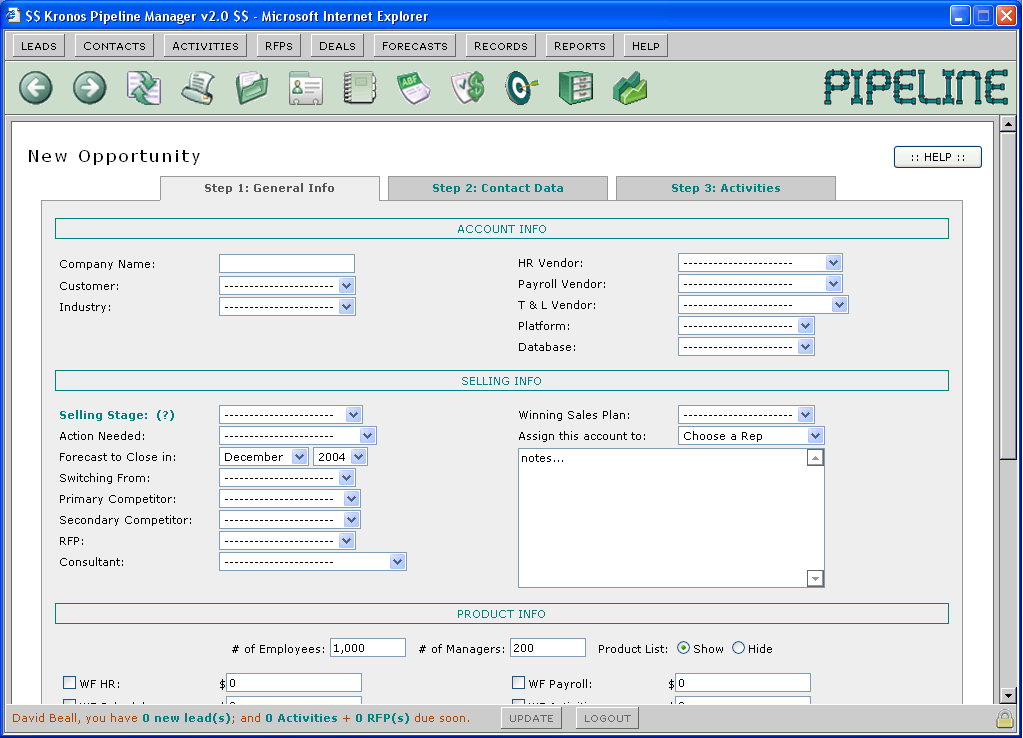
A desktop-like interface used browser frames, a persistent navigation bar, and guided forms. Opportunity and product information stayed within a familiar application shell, with reporting and contextual help close at hand.
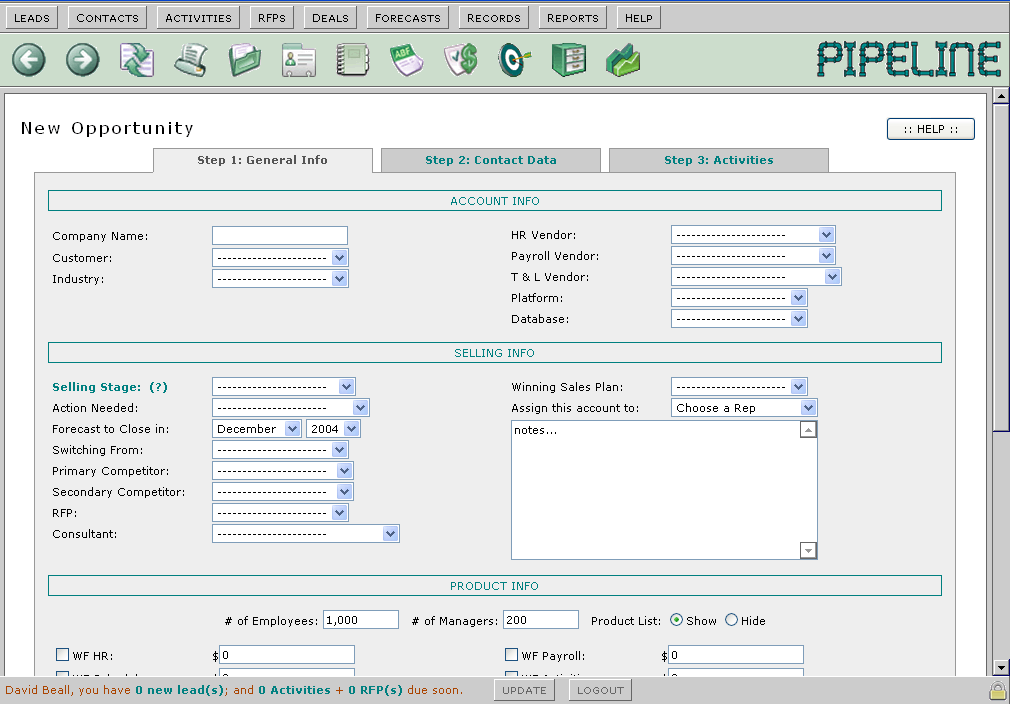
Opportunity management
Guided steps and detailed forms organize account, selling, and forecast information.
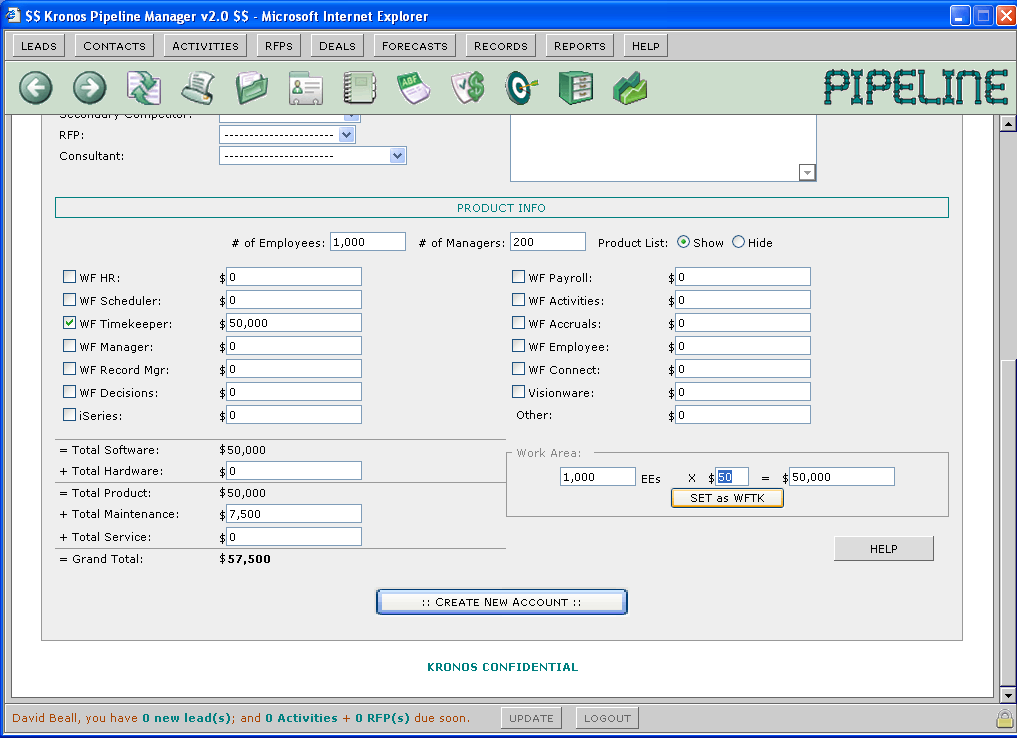
Product configuration
A rich, interactive product license calculator simplified pricing.
- Desktop-style browser interface
- Guided opportunity forms
- Reporting and forecasts
- Contextual help
The Engineering
From the interface
to the database.
As the solo developer, I owned requirements, UX, implementation, SQL queries, deployment, and ongoing maintenance. The work extended from the browser interface to application logic and database access.
Classic ASP 3 and VBScript, IIS, ODBC/SQL Server, and Java-plugin charts reflect the tools of that period. They describe the historical implementation, not a recommended stack for a new application.
-
Classic ASP 3
VBScript
-
SQL Server
ODBC and SQL queries
-
IIS
Web application hosting
-
Browser UI
Frames, HTML, and forms
-
Java charting
Browser-plugin charts
-
User guidance
Help and documentation
The Impact
Building software was
only part of the job.
The suite became mission-critical production software for Kronos sales operations. I maintained the applications and supported the people who relied on them, including writing a 77-page training guide in 2005.
The applications were eventually replaced through a transition to Salesforce—a multimillion-dollar project, as I recall. That early responsibility for software, users, documentation, and support continues to inform how I lead engineering today.